Eyes of the Reef Marianas
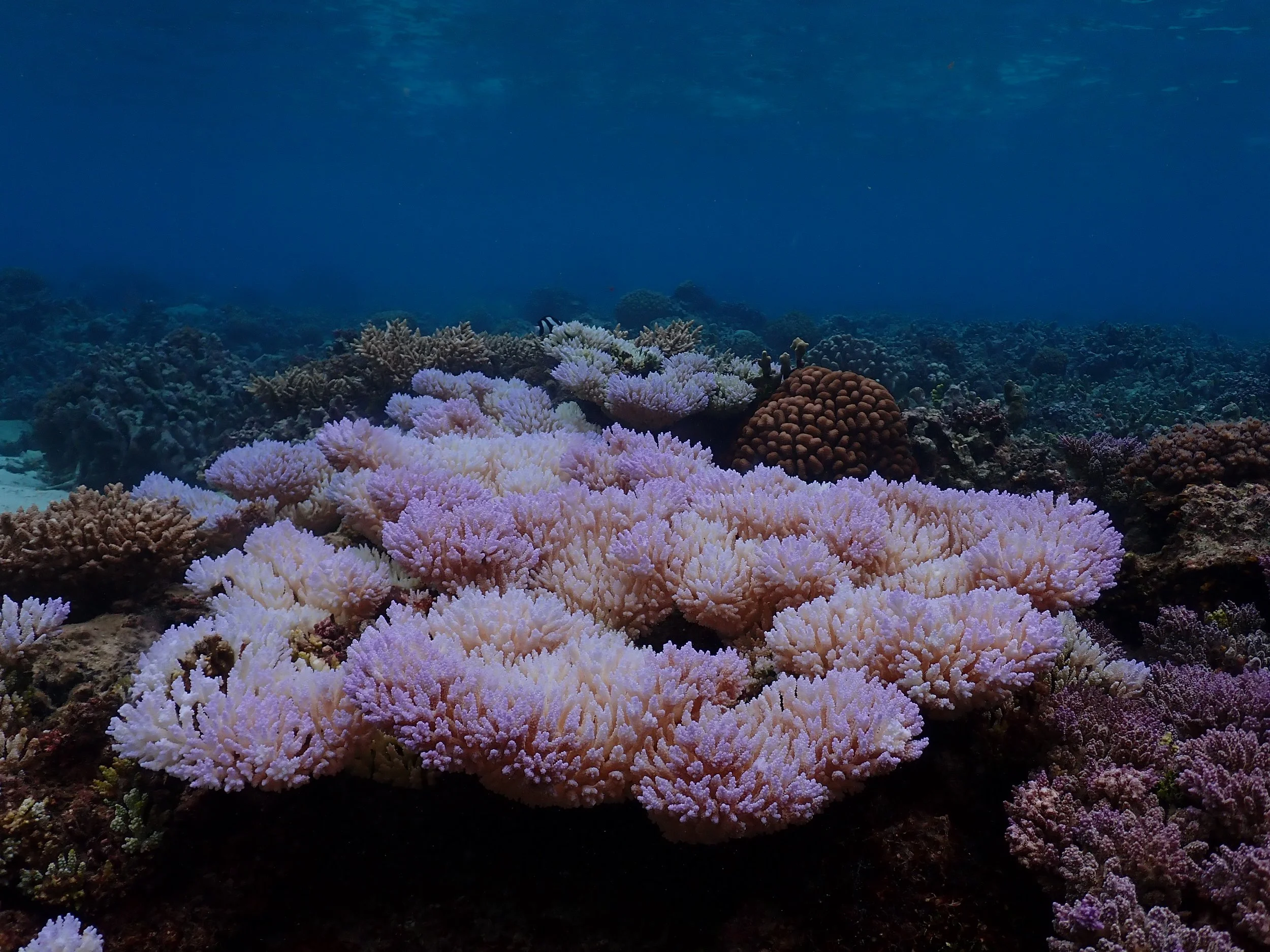
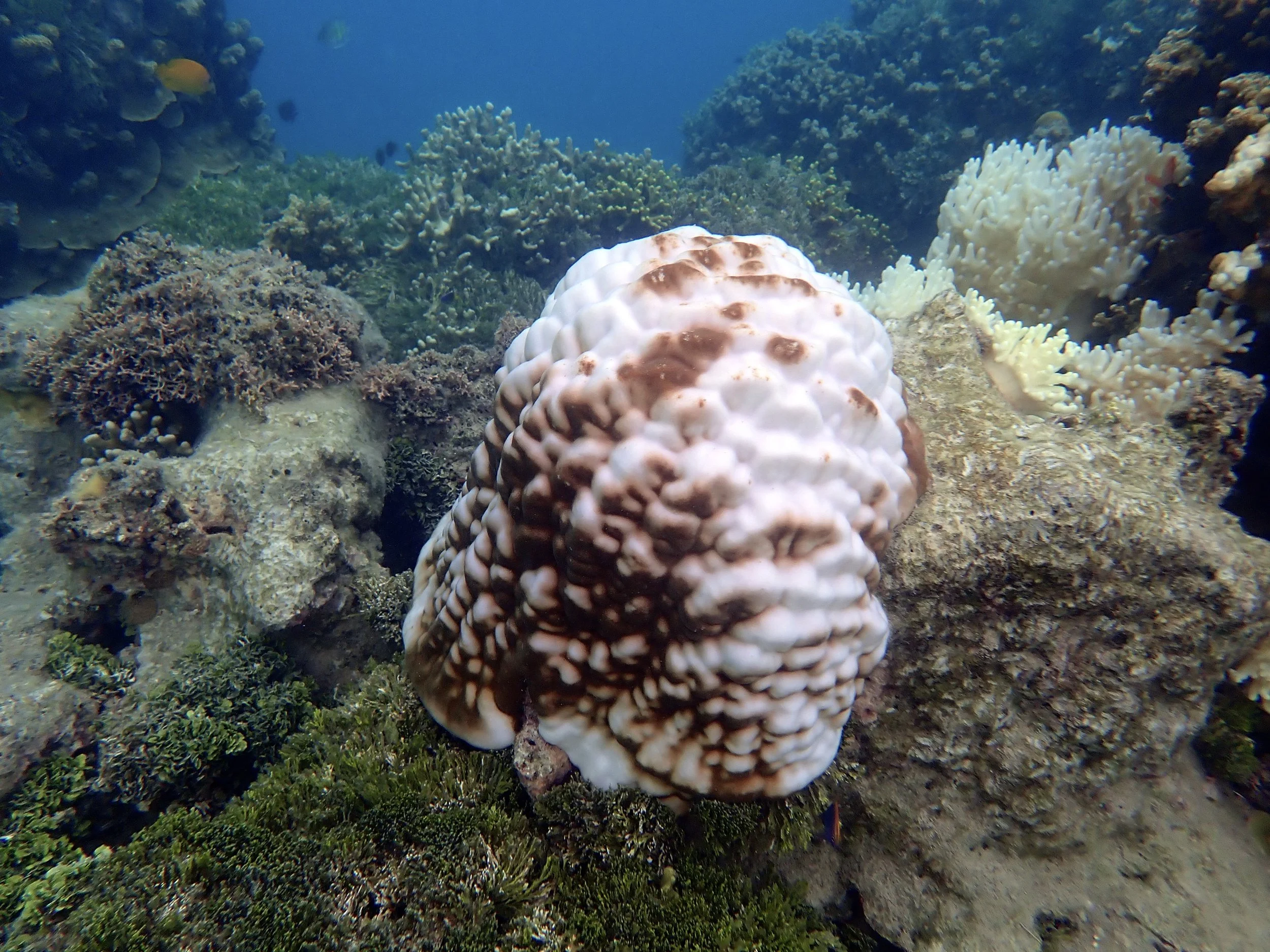
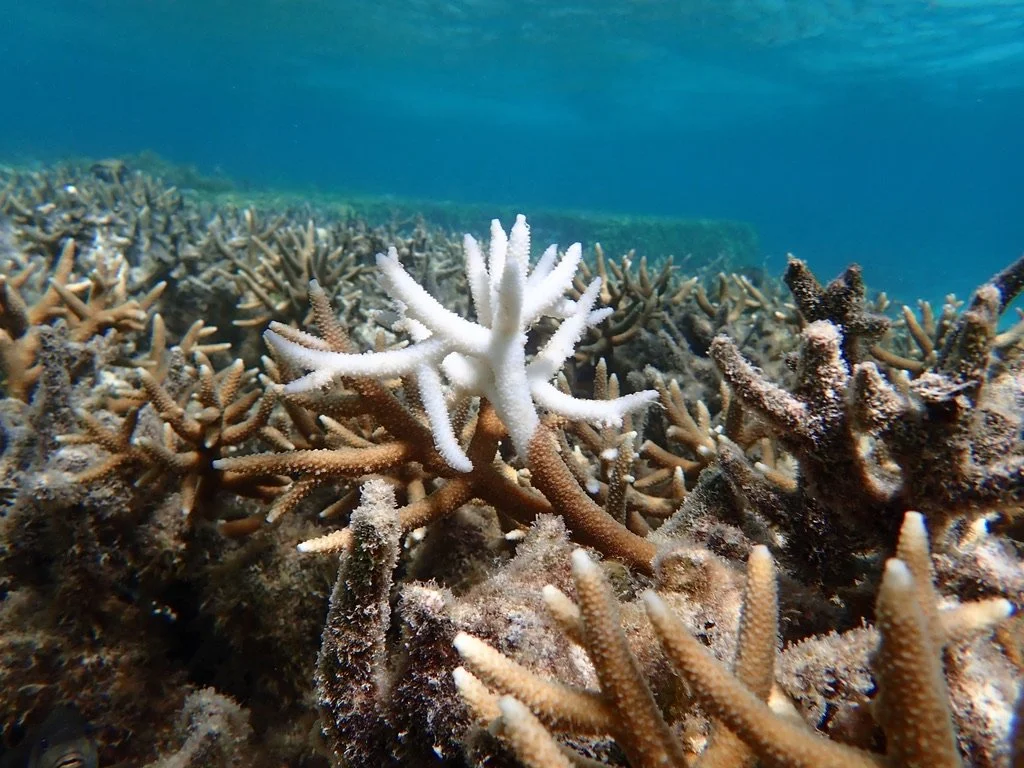
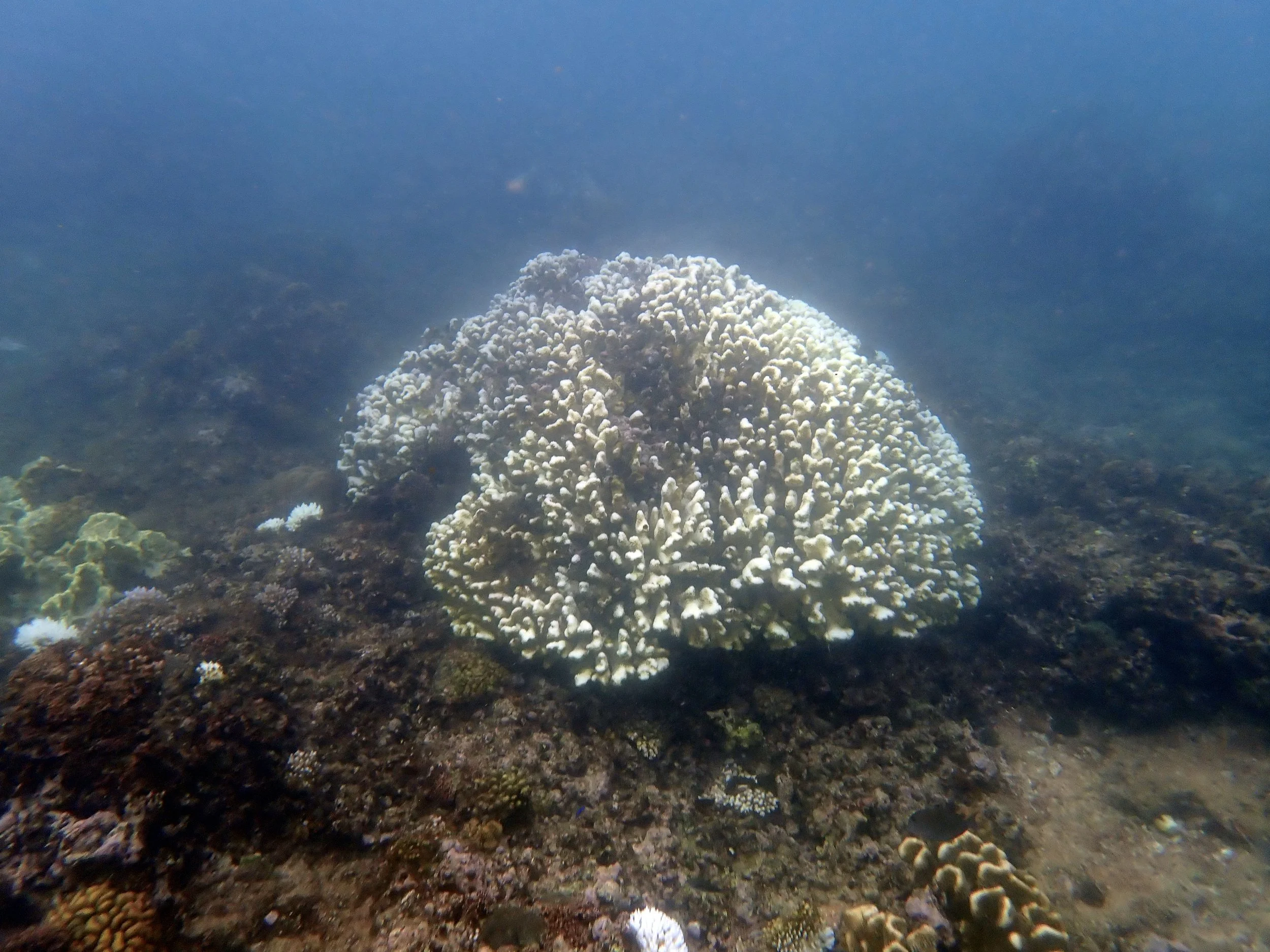
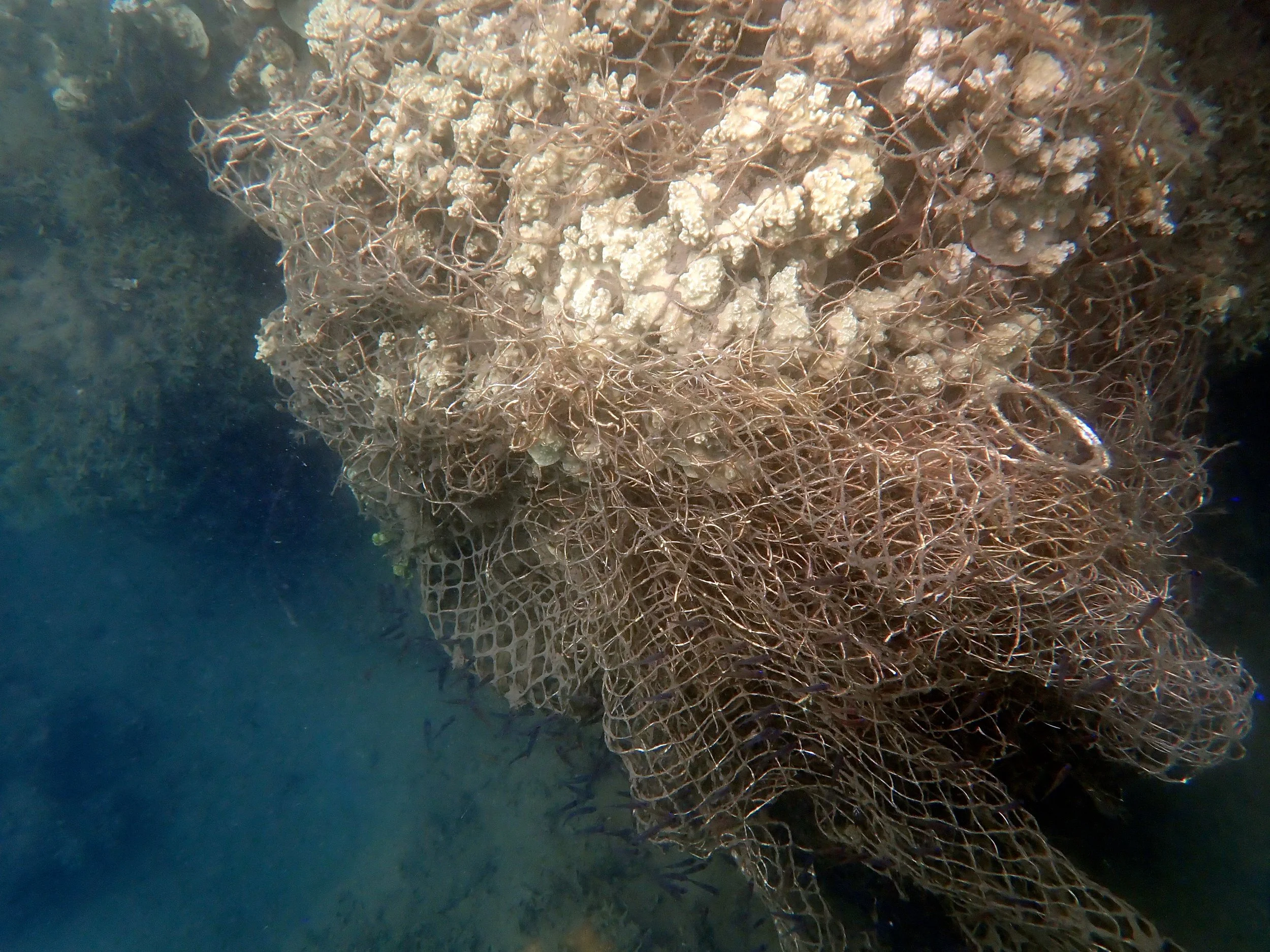
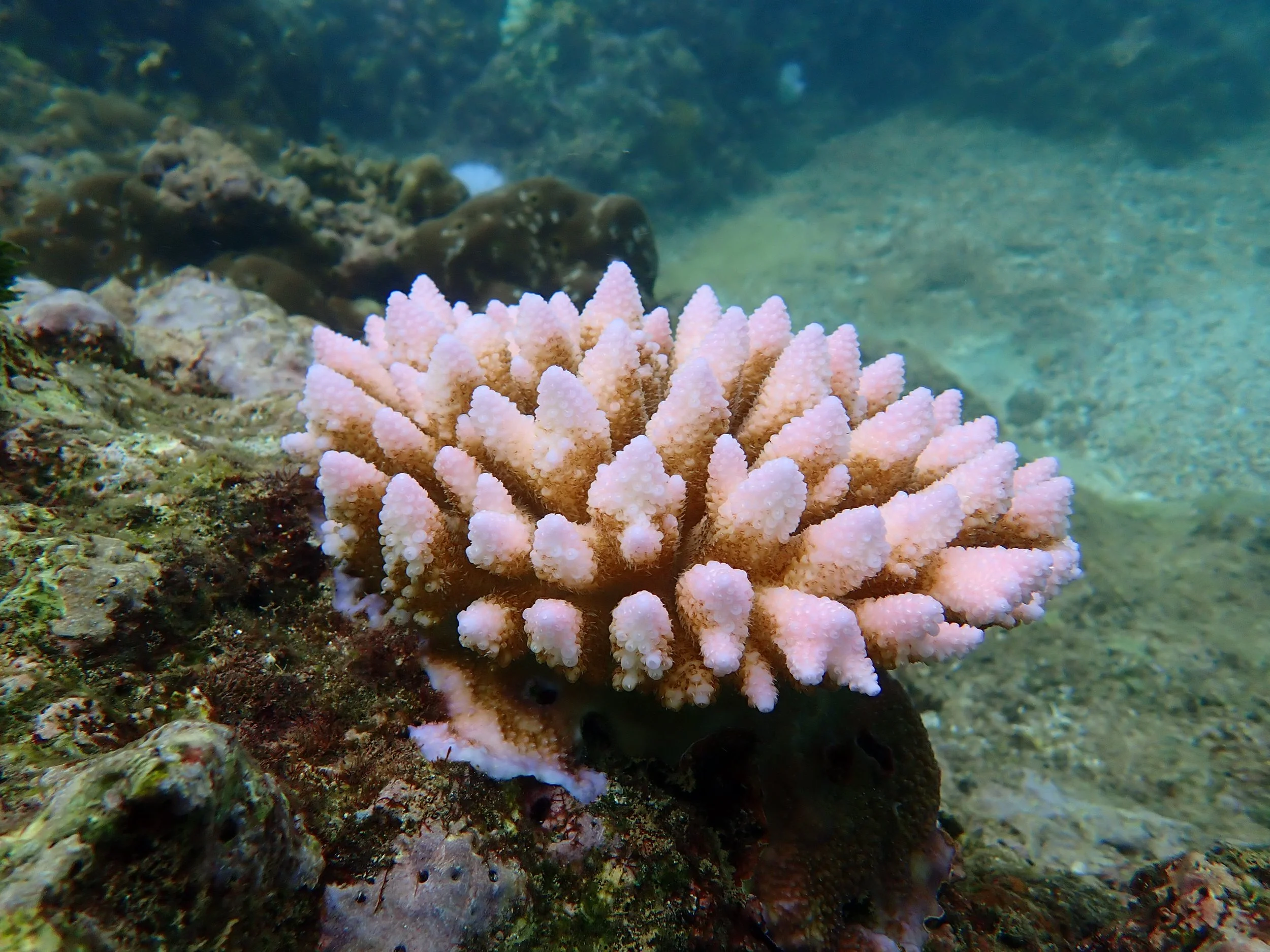
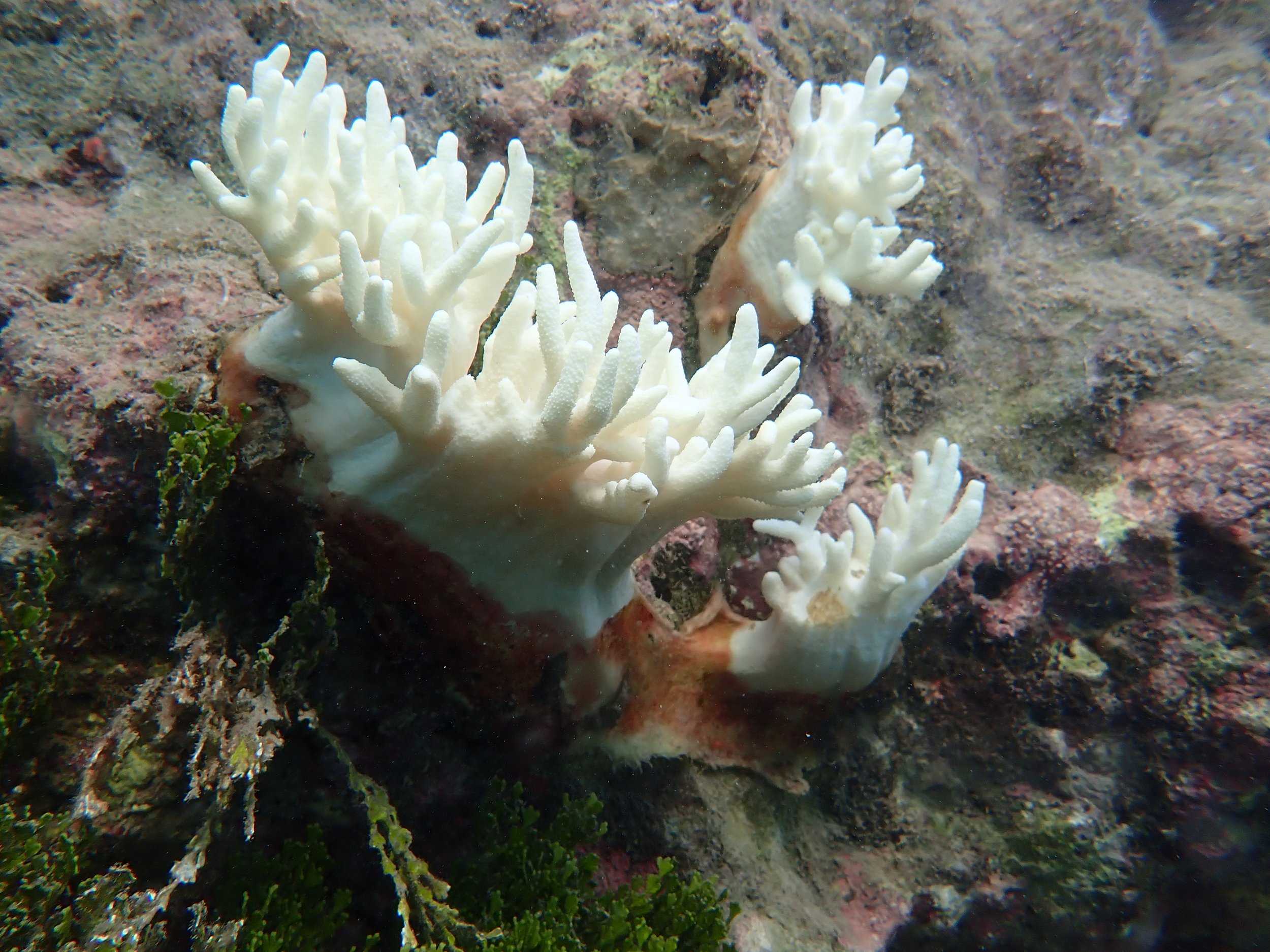
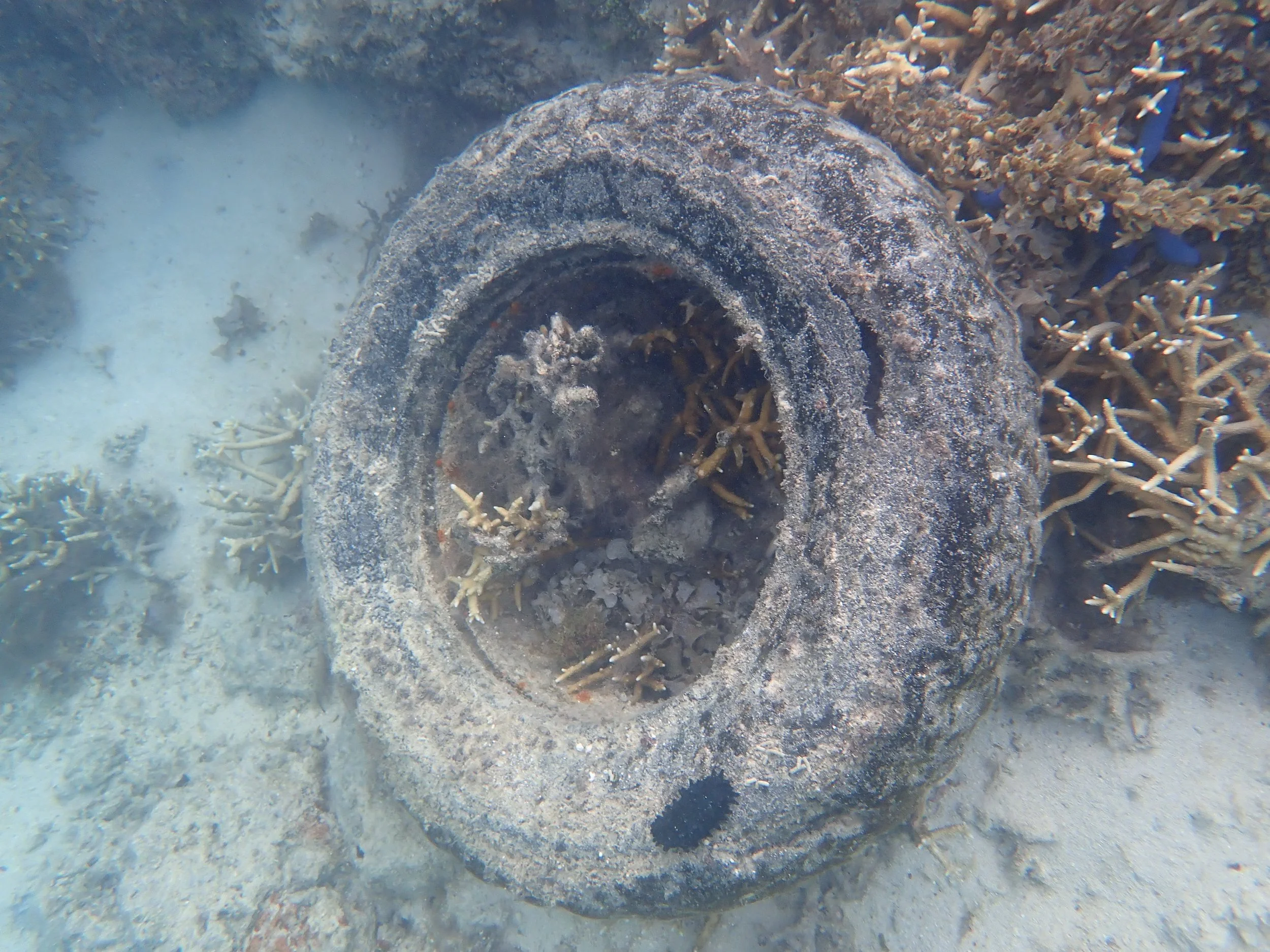
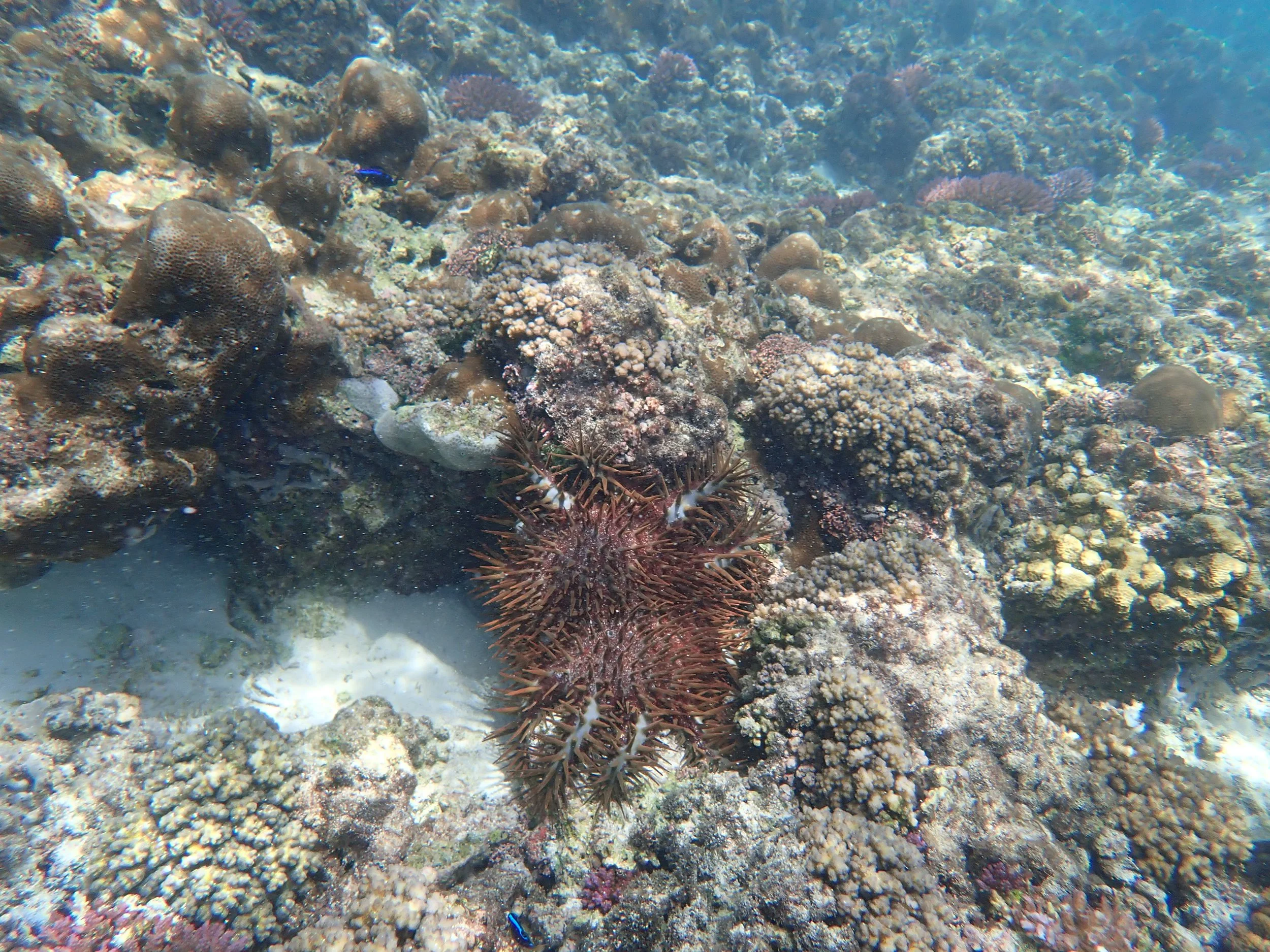
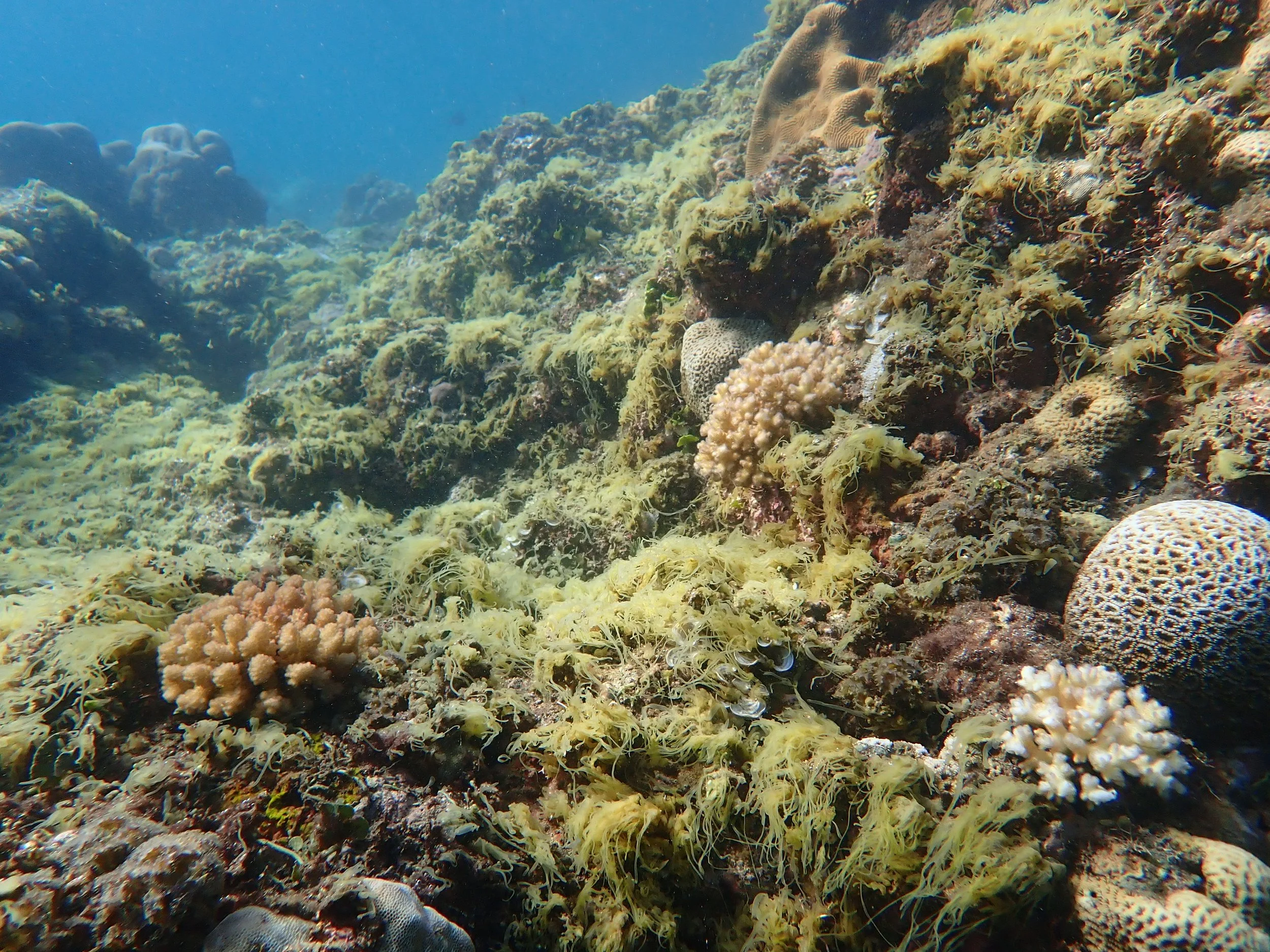
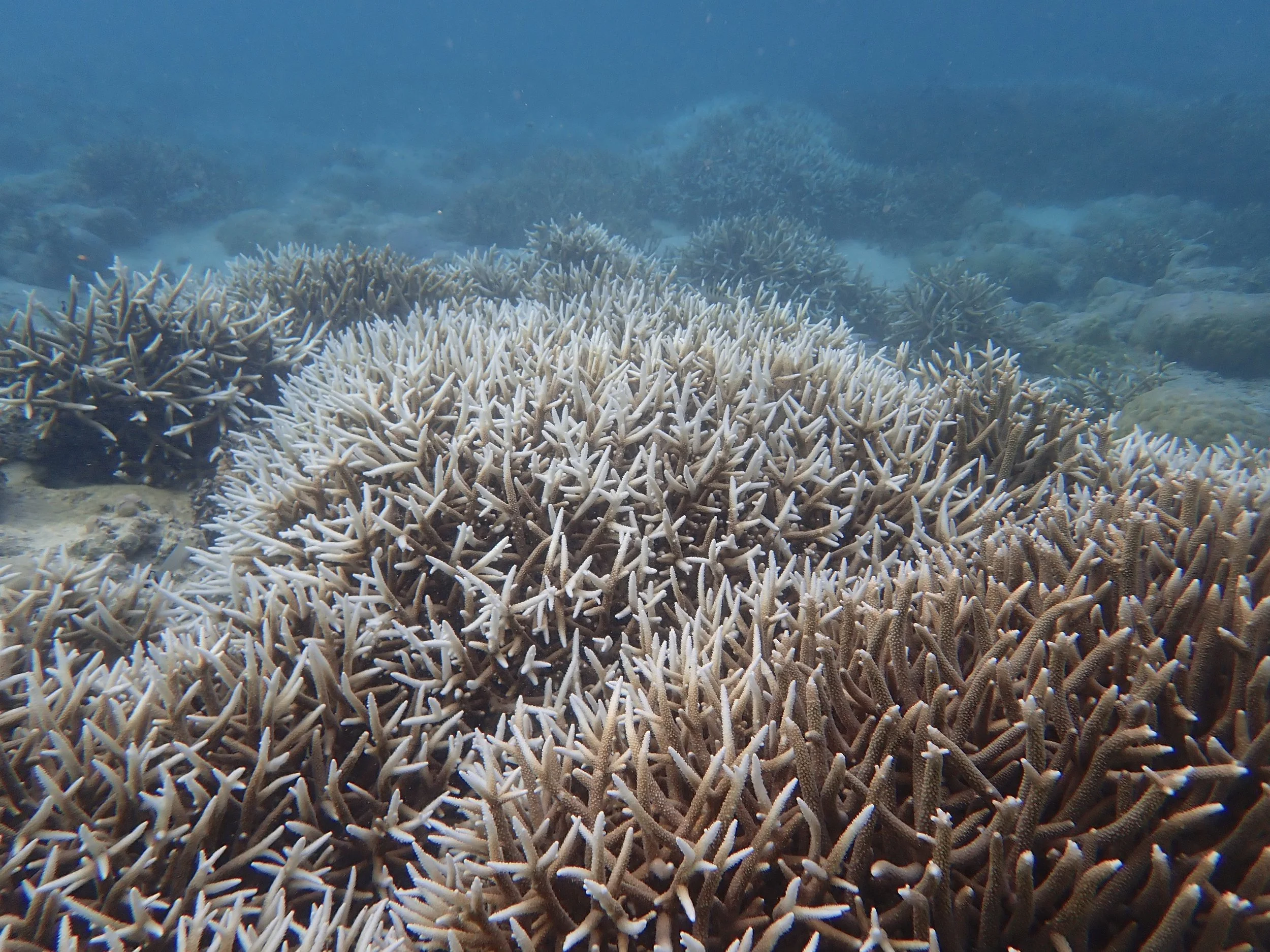
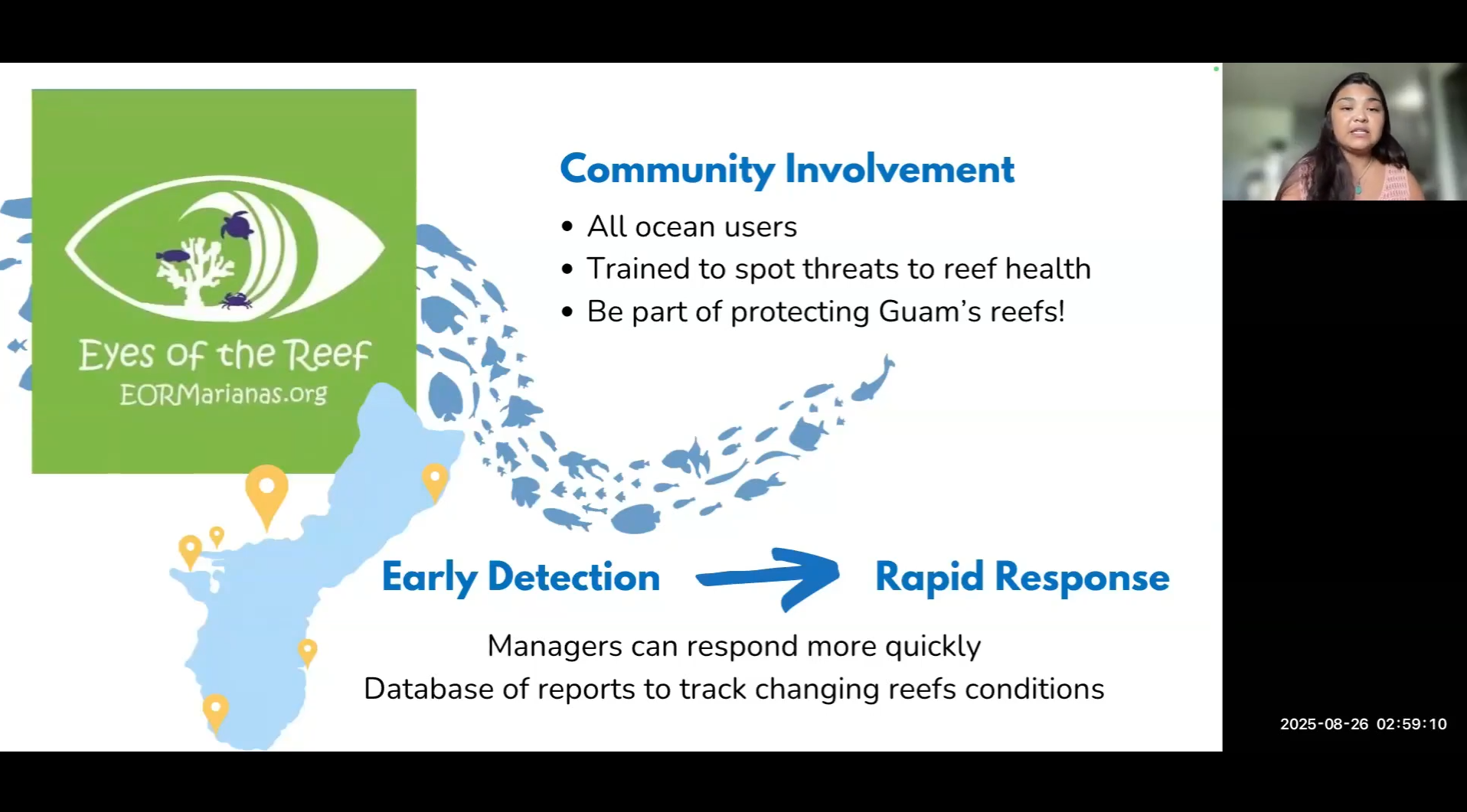
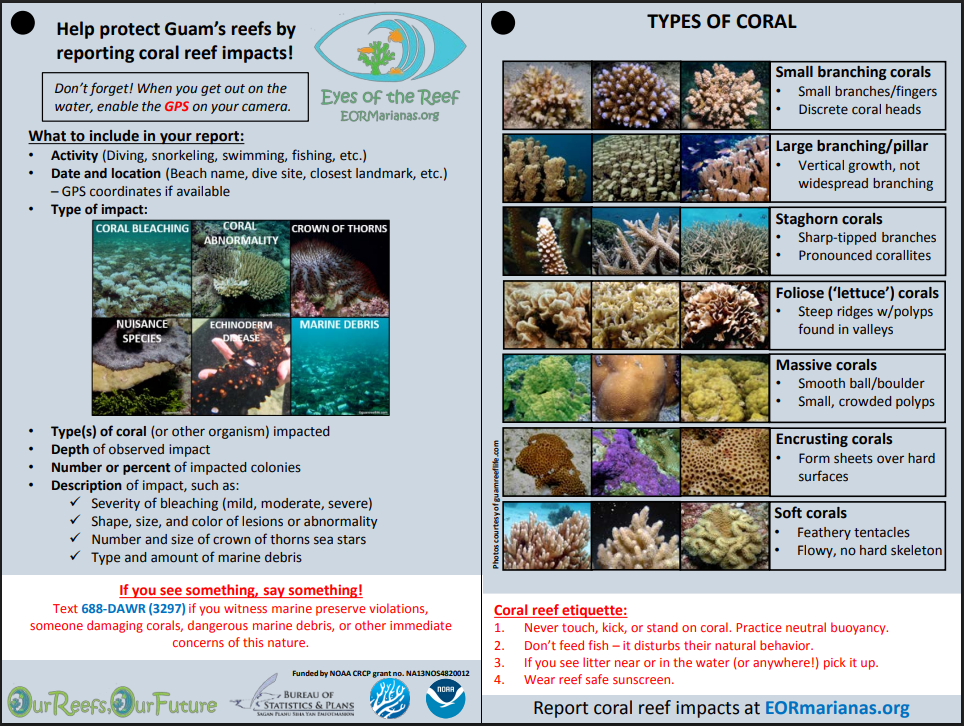
Eyes of the Reef (EOR) Marianas is a program that trains community members of all ages to identify and report coral reef threats. In-person EOR trainings are offered quarterly and cover topics like the basics of coral biology, coral bleaching, crown-of-thorns sea star outbreaks, and marine debris.
Although the training is geared towards ocean-goers like snorkelers, divers, and freedivers, it is still a fantastic learning opportunity for non-ocean-goers looking to learn more about Guam’s coral reefs!
Sign up here to be notified of the next EOR training, or follow GCRI on social media for more updates
Saw something in the water?
Submit a reef report here
This form is also accessible through this link: https://forms.gle/jAcZ4snqH1x4W8M48
**You can still submit reports even if you have not participated in EOR training.
Learning Resources
Frequently-asked Questions
-
No, there is no age limit! People of all ages (including kids) are welcome to attend EOR in-person classroom trainings.
The training material is geared towards adults, but still presents a fun opportunity for ocean-minded kids to learn more and become future ocean stewards.
-
Yes, 100% free! The in-person classroom training is free for anyone to attend.
We do not provide any snorkeling/freediving/scuba gear, so you would need to provide that for yourself if you would like to get in the water to monitor for reef threats.
-
Not necessarily! Anyone is welcome to attend EOR in-person classroom training, whether you know how to swim or not. It is a wonderful opportunity to learn more about Guam’s coral reefs.
However, to submit EOR reports, we recommend that you have at least a basic familiarity with the ocean to stay safe while you explore the reef and monitor for threats. Any in-water reef monitoring is on your own free time, and you are responsible for your own safety.
-
No, unfortunately, we do not provide in-water training at this time. We simply provide the in-person classroom training, and participants can then explore the reef on their own time and submit reports of any reef threats they encountered.
-
Unfortunately, we don’t offer service-learning hours for EOR at this time. However, in the future, we hope to offer service learning hours for attending the in-person classroom training. We will update this website once we are able to offer this.
-
Yes, you can! Any reports help us and our partners respond to reef threats properly and in a timely fashion.
The classroom training is meant to teach you how to identify threats and provide you with helpful background information, but if you already know how to identify reef threats on your own, then feel free to submit reports without having attended the classroom training.
-
The EOR classroom training provides a great opportunity to increase your knowledge about Guam’s coral reefs! You also gain valuable skills in identifying reef threats.
Submitting reports to EOR benefits Guam’s coral reefs by alerting us to reef threats we may not be aware of yet. These reports help us and our partners respond to reef threats quickly and efficiently.
EOR is also a great way for prospective marine biologists to get involved and gain experience in ocean fieldwork. By joining our EOR WhatsApp community after in-person classroom training, you can also build valuable connections with other ocean-minded individuals on Guam.
-
We are so glad you asked! Check out other ways to get involved here
EOR history
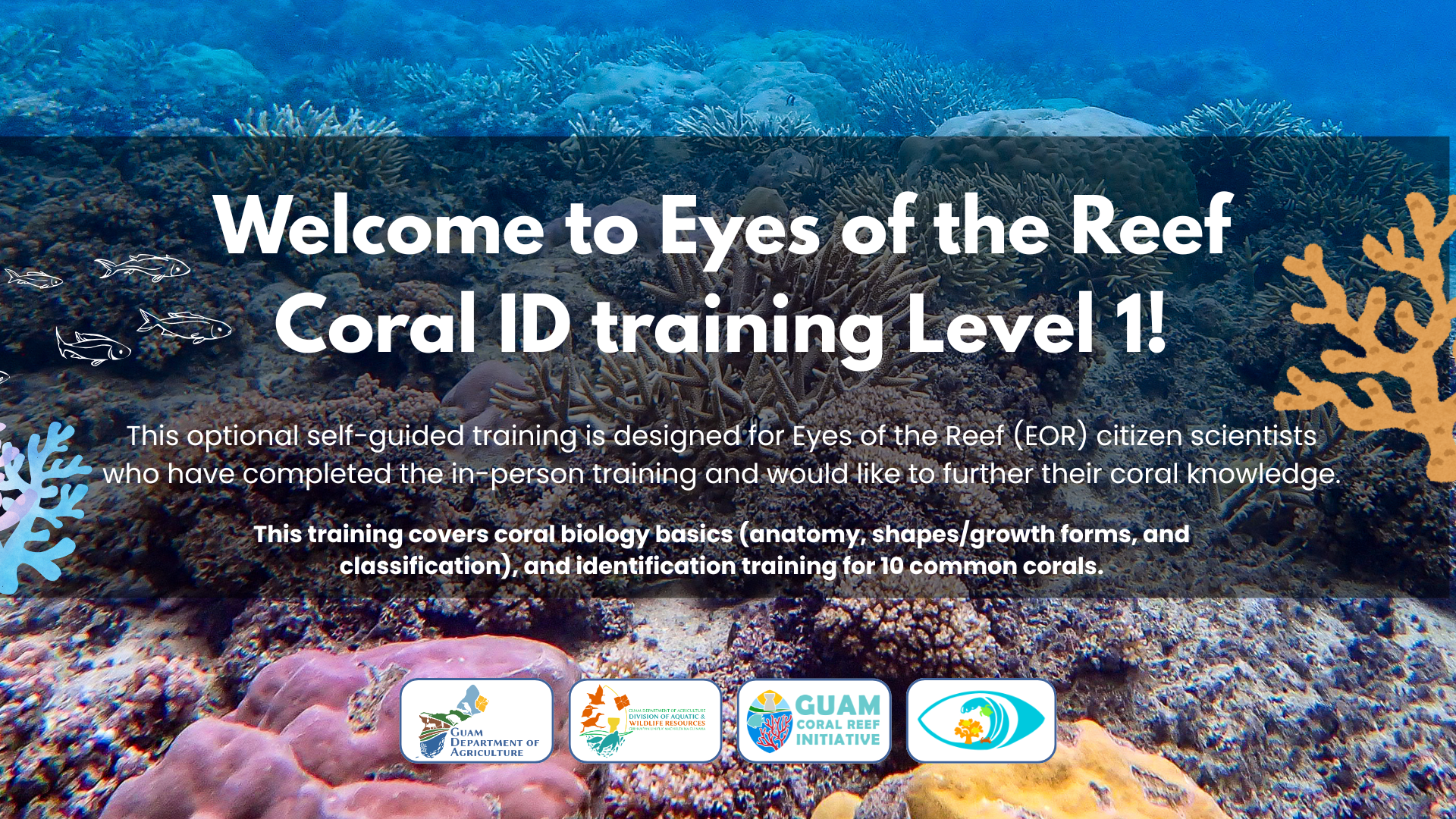
EOR was launched in 2015 and was modeled after the Eyes of the Reef Hawai’i program. Training topics included coral identification, coral bleaching, coral abnormalities and disease, crown-of-thorns sea star outbreaks, nuisance species, marine debris, and echinoderm disease. In-person classroom trainings were well-attended from 2016-2019, and in-water trainings were also held periodically.
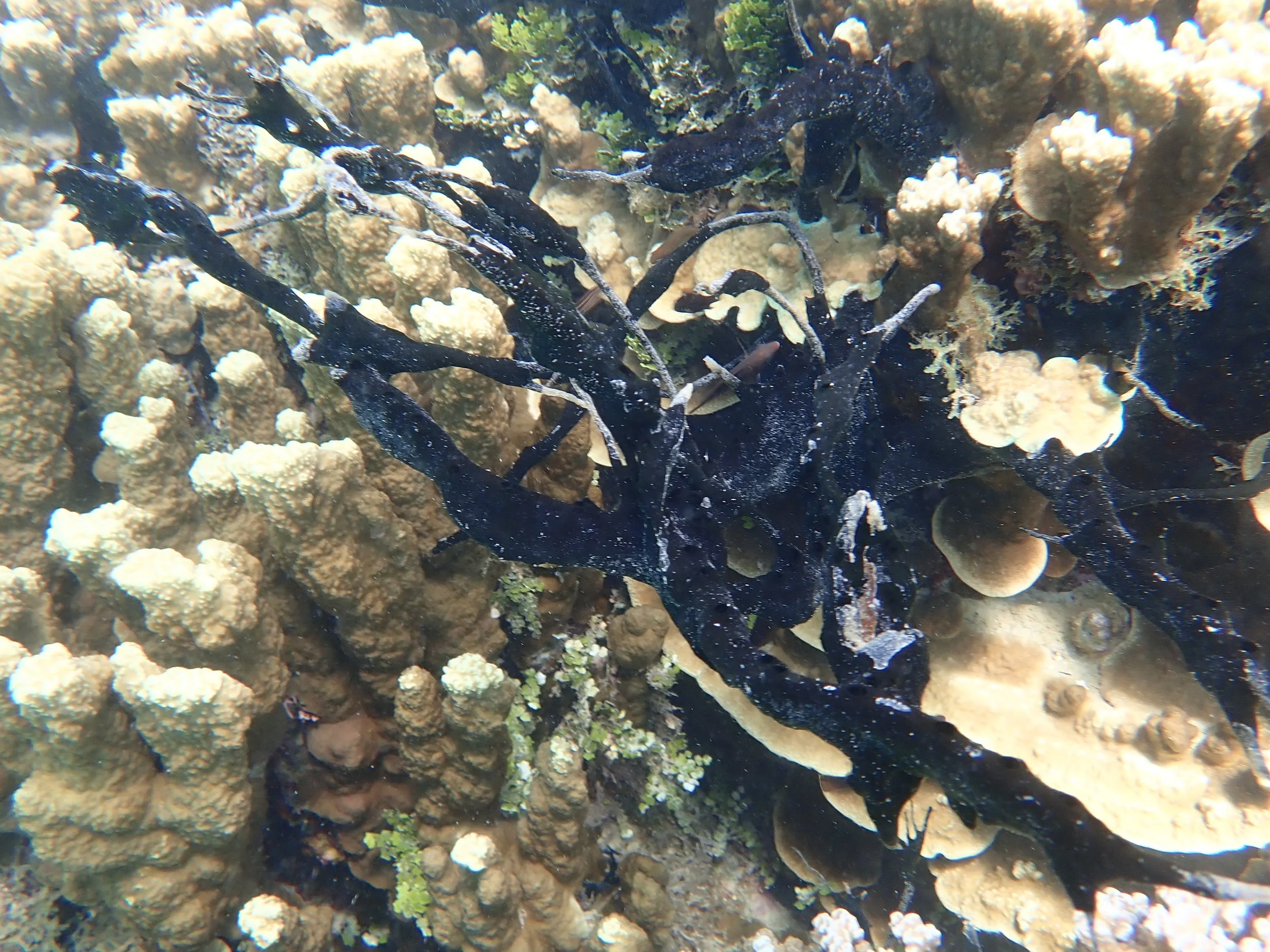
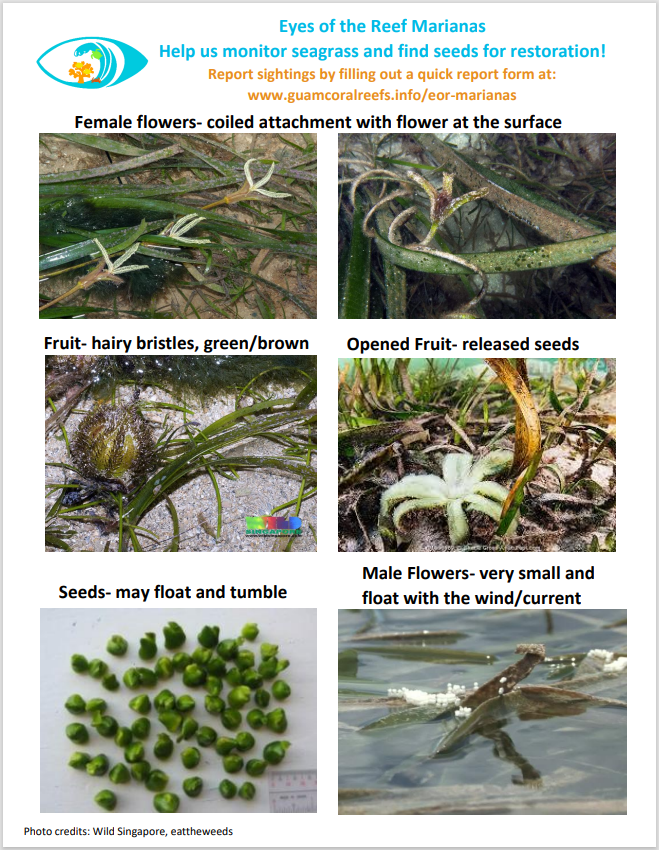
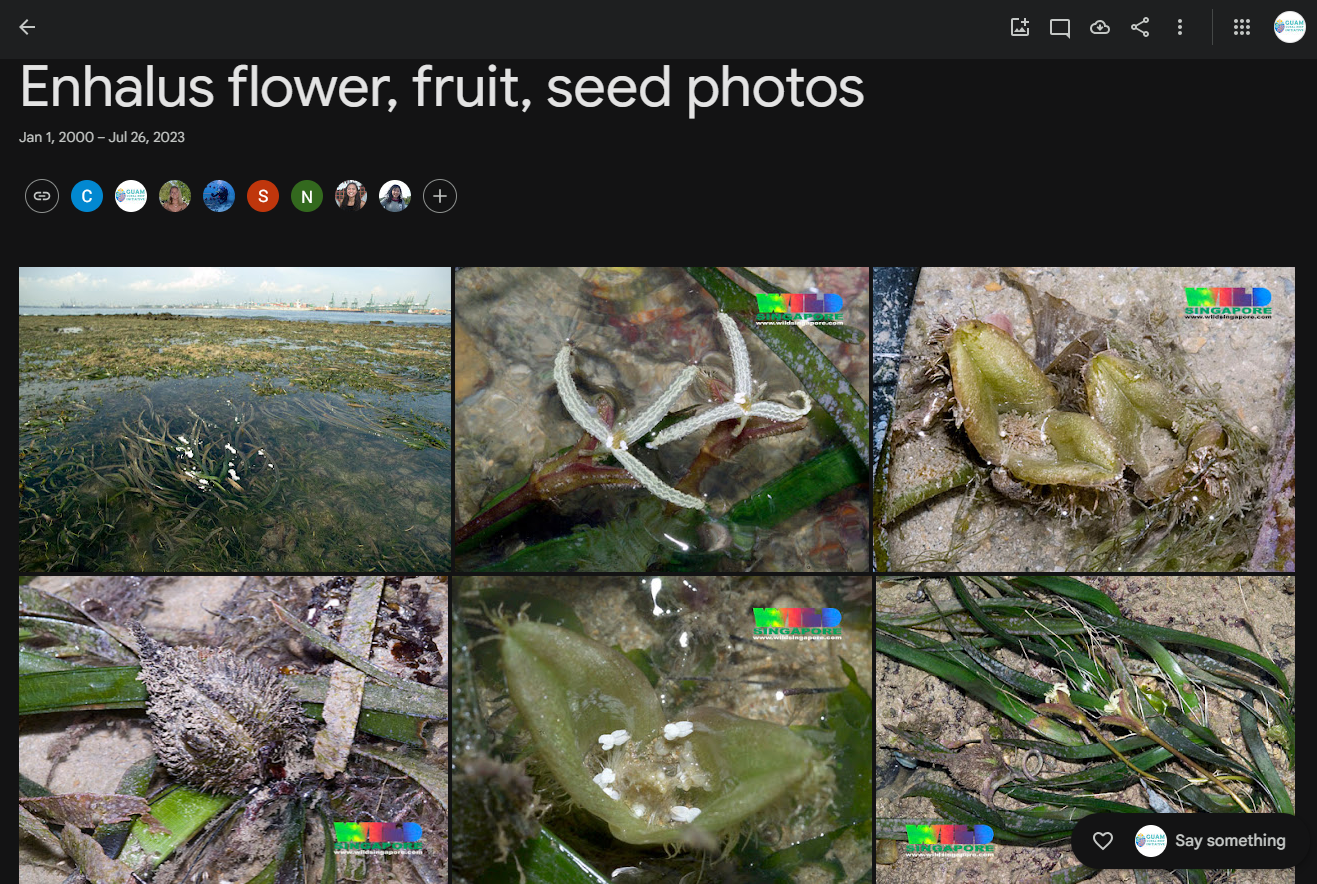
In-person classroom trainings were paused from 2020 to 2024 due to the COVID-19 pandemic and Typhoon Mawar. The EOR program and training materials were revamped in 2024, and in-person classroom training resumed in 2025. New training topics include coral biology basics; coral bleaching; differentiating bleaching from coral predation, fluorescing, and death; crown-of-thorns sea star outbreaks, icky stuff (like algae overgrowth), marine debris, and seagrass monitoring.
EOR was formerly supported by the Nature Conservancy under cooperative agreement award #NOAA-NA22NOS4820123 from the National Oceanic and Atmospheric Administration’s (NOAA) Coral Reef Conservation Program, U.S. Department of Commerce. This funding supported the old EOR website, eormarianas.org. Local Nature Conservancy staff managed the program with assistance from GCRI staff through 2025.
As of 2026, EOR is now managed by GCRI staff, with assistance from Nature Conservancy staff. EOR is currently supported by NOAA (grant # NA25NOSX482G0009). The original EOR website was transitioned over to this website page in early 2026.
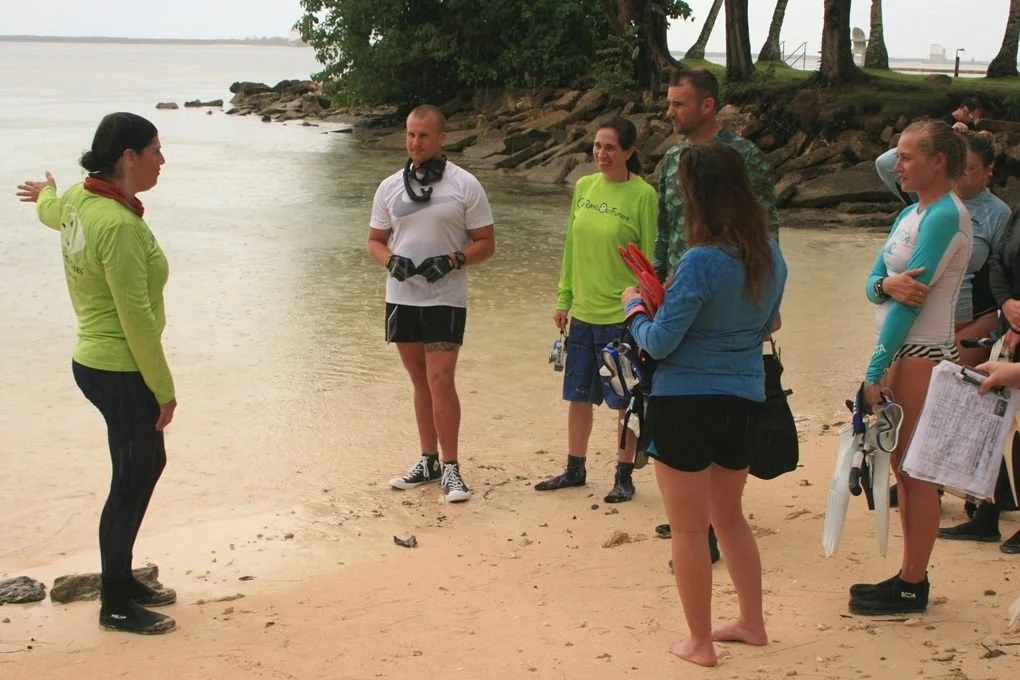
EOR in-water training in 2017

EOR classroom training in 2019
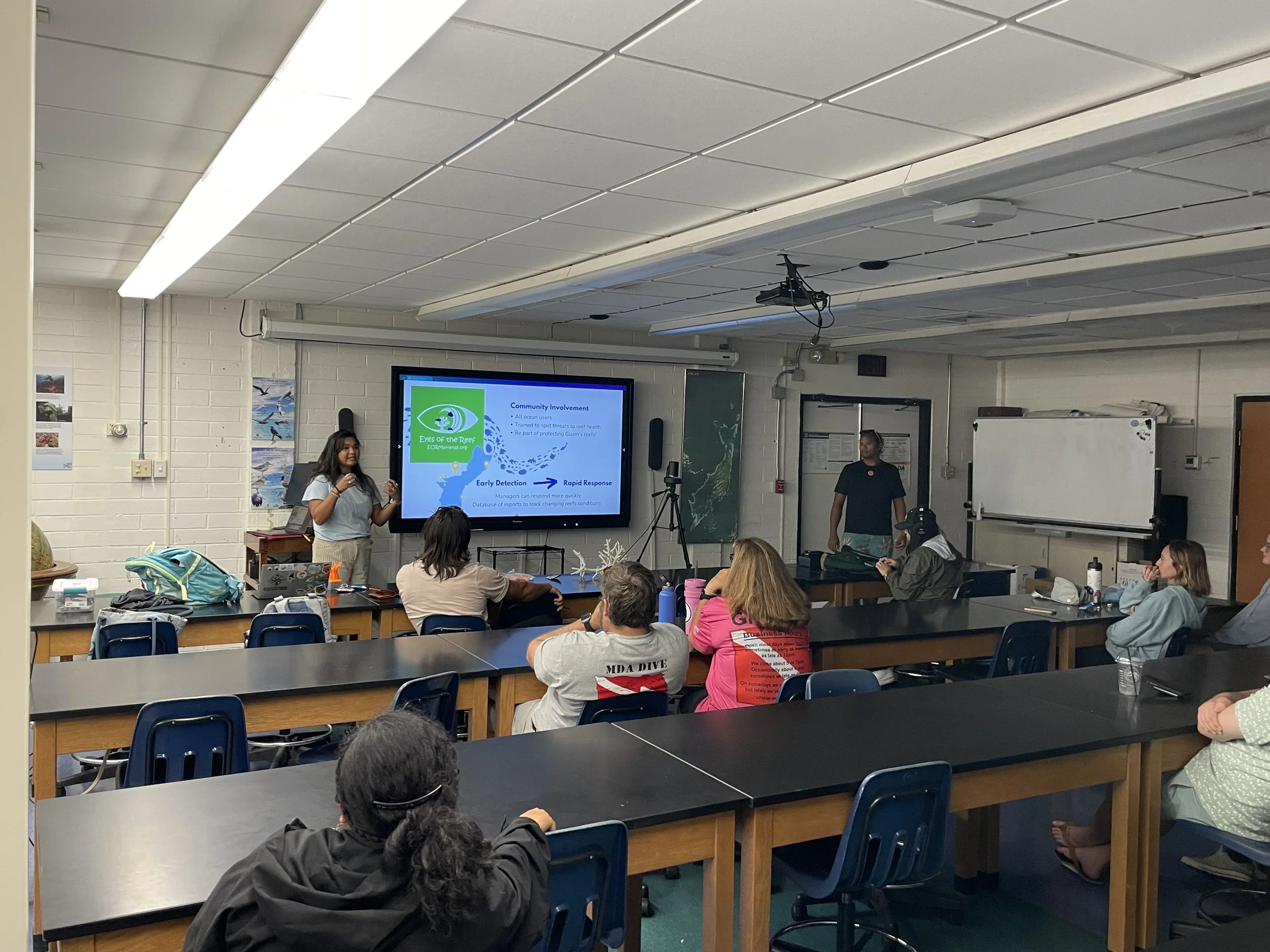
EOR classroom training in 2025
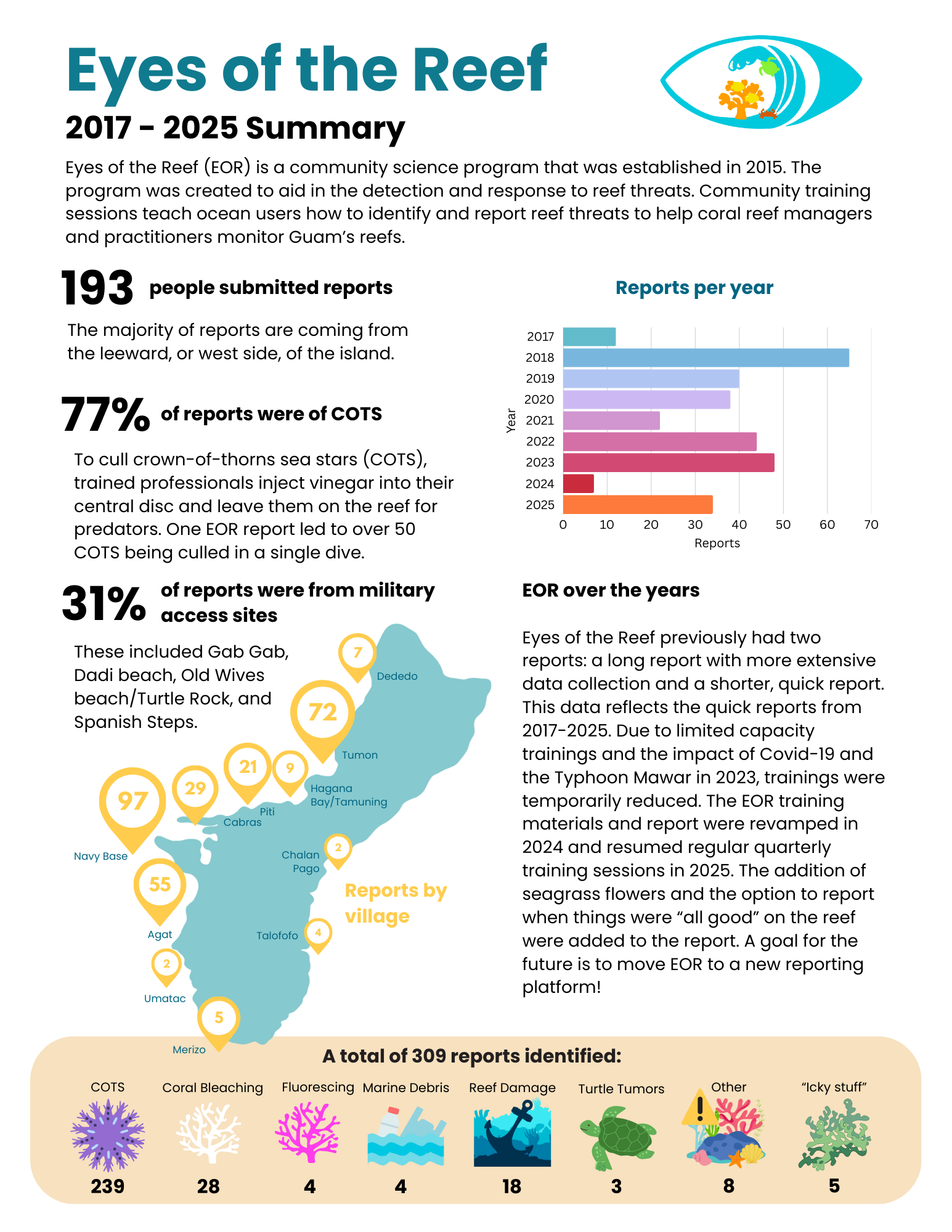
Reef threats gallery